Hospital Discharge Care — Home Safely, Recovering Confidently.
Leaving hospital can feel overwhelming — for the person being discharged and for the family waiting at home. Hospital discharge care provides professional support from day one: ensuring safe recovery, proper medication management, and the practical help needed to avoid an early readmission.
Care Arranged in 24 Hours · Rapid Assessment · CQC Registered Provider

Why It Matters
Why the First Days Home Are Critical
Hospital discharge is a transition point where things can go wrong quickly. Without proper support at home, individuals who have just had surgery, suffered a stroke, recovered from a serious infection, or been treated for a cardiac event are at significantly elevated risk of falling, missing medication, becoming dehydrated, or deteriorating to the point of readmission.
NHS discharge teams work hard to get people home as quickly as safely possible — but their remit ends at the hospital door. What happens next depends on what is in place at home. For many families, that gap between leaving hospital and having proper support in place is a genuinely dangerous one.
Beryl Healthcare's hospital discharge care service exists to close that gap. We work quickly, we communicate directly with ward teams and families, and we ensure that from the moment a person crosses their own threshold, they have the professional support they need to recover safely and well.
Arranging Discharge Care?
Contact us as early as possible — even while the hospital stay is still ongoing. Early contact allows us to complete an assessment and have care in place for the moment of discharge.
What We Provide
What Our Discharge Care Includes
Welcome home — first-day setup, orientation, and immediate comfort
Personal care — washing, dressing, and grooming during recovery
Medication management — discharge medication reviewed and managed correctly
Wound care observation — monitoring post-surgical wounds alongside clinical teams
Nutritional support — meal preparation, hydration, and dietary recovery needs
Mobility assistance — safe movement, transfers, and fall prevention during recovery
Physiotherapy exercise support — assisting with prescribed recovery exercises
Transport coordination — supporting follow-up appointments and outpatient visits
Equipment setup — helping with any aids or equipment sent home from hospital
Health monitoring — observing recovery progress and escalating if concerns arise
Liaison with clinical teams — communicating with GP, district nurse, and hospital
Family updates — keeping families informed throughout the recovery period
Our Process
How Discharge Care Is Arranged — Fast
Contact Us Early
Call us during the hospital stay — the earlier we know, the better prepared we can be. We accept referrals from families, discharge teams, and social workers.
Rapid Assessment
We complete a brief telephone or in-person assessment, often within hours. For planned discharges, we visit the home beforehand.
Care Plan in Place
We prepare a discharge care plan — covering the first days at home, medication, mobility, and any specific post-discharge requirements.
Care Begins Day One
A carer is at the home on discharge day. There is no gap, no delay, and no period where the individual is managing alone.
Contact Us Early
Call us during the hospital stay — the earlier we know, the better prepared we can be. We accept referrals from families, discharge teams, and social workers.
Rapid Assessment
We complete a brief telephone or in-person assessment, often within hours. For planned discharges, we visit the home beforehand.
Care Plan in Place
We prepare a discharge care plan — covering the first days at home, medication, mobility, and any specific post-discharge requirements.
Care Begins Day One
A carer is at the home on discharge day. There is no gap, no delay, and no period where the individual is managing alone.
The first day home after hospital should feel safe, not overwhelming. We make sure it does.
Returning home is a moment that should bring relief — not anxiety. Our discharge carers arrive prepared, briefed, and ready. Medication is managed. The home is settled. The individual is supported. And the family can breathe again, knowing that the hardest part of the transition is being handled by people who know exactly what they are doing.
Is This Right for Your Family?
Who Hospital Discharge Care Is For
Hospital discharge care is appropriate for anyone leaving hospital who needs support at home to recover safely — but does not yet have the care arrangements in place to manage without professional help. This includes individuals recovering from surgery, stroke, cardiac events, serious infections, or significant falls. It is particularly important for older adults who live alone and whose families cannot be present full-time, and for individuals with pre-existing health conditions that make the recovery period more complex or higher risk.
Discharge care can be short-term — a few weeks of intensive support while recovery progresses — or it can identify a need for longer-term care and transition naturally into a more permanent arrangement. We review regularly and adapt as the picture becomes clearer.
We also work directly with hospital discharge teams, occupational therapists, and social workers. If you are a healthcare professional arranging care for a patient, please call our team directly.
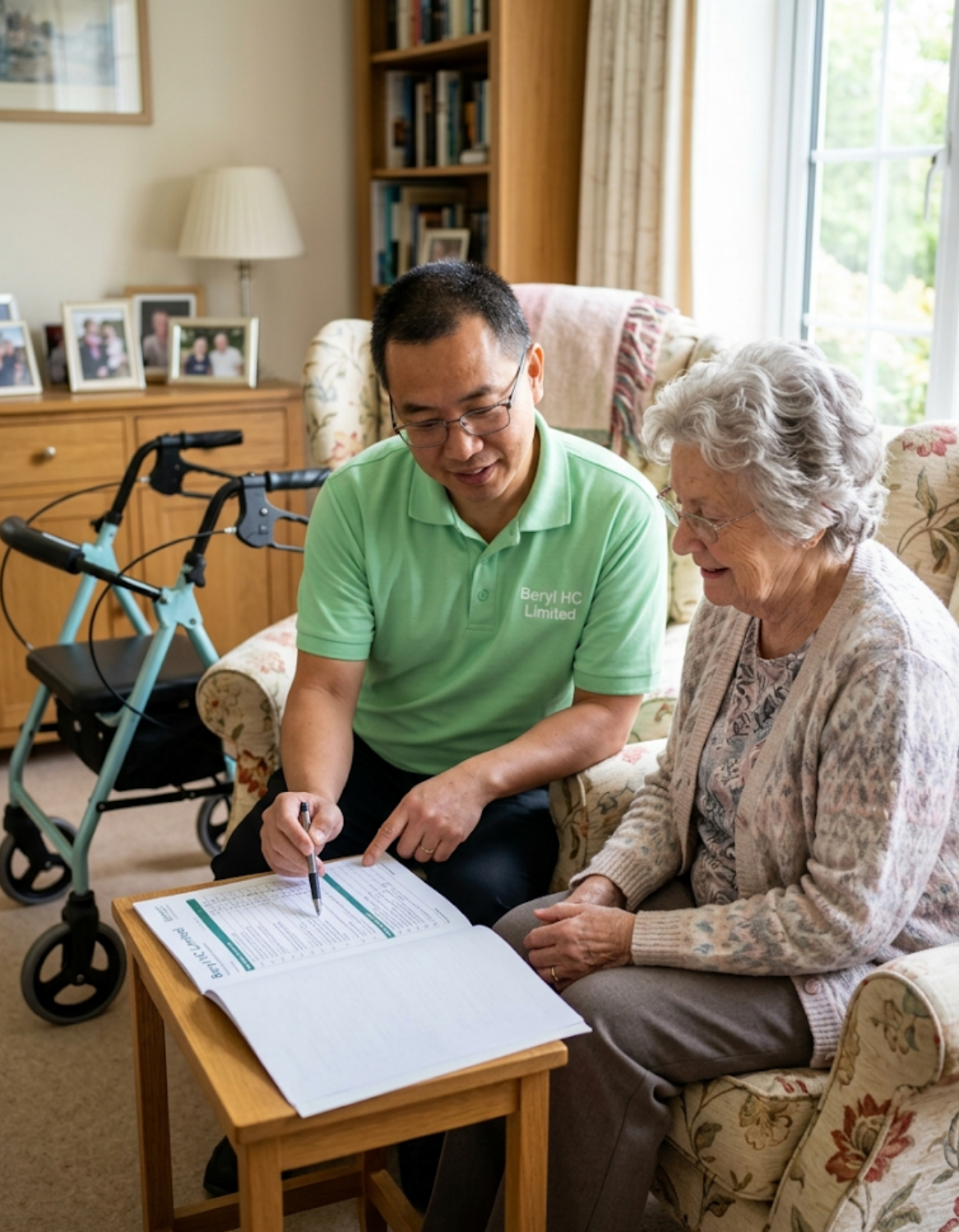
Why Families Trust Us
Why Families and Professionals Choose Beryl
We Move Fast
We can complete a discharge assessment and have care in place within 24 hours of contact — often less for same-day discharge situations.
We Communicate Directly
We liaise with ward teams, GPs, district nurses, and OTs directly — reducing the burden on families during an already stressful time.
Experienced Carers
Every carer has experience supporting individuals during post-hospital recovery — they understand the particular needs and risks of this period.
Medication Management
Discharge medications are one of the most common points of failure after hospital. Our carers manage this carefully and accurately from day one.
We Spot Deterioration Early
Our carers are trained to observe and report early signs of deterioration — reducing the risk of readmission and ensuring rapid clinical response.
Seamless Transition
When longer-term care is needed, we transition from discharge care to a permanent arrangement without disruption to the individual.
Common Questions
Frequently Asked Questions
Ready to Arrange Discharge Care?
Whether discharge is happening today or is planned for next week, our team is ready to act. Call us or send an enquiry — the earlier we hear from you, the better prepared we can be for day one at home.
Same-Day Discharge?
Please call our team directly on [NUMBER]. We prioritise discharge enquiries and will do everything possible to have care in place today.