Palliative Care at Home — Comfort, Dignity, and Compassion.
At end of life, being at home is often what matters most. Beryl Healthcare provides palliative care that allows individuals to spend their final weeks and months in familiar, comfortable surroundings — supported by carers who approach this work with the skill, sensitivity, and humanity it requires.
Compassionate End-of-Life Care · Family-Centred Support · CQC Registered Provider
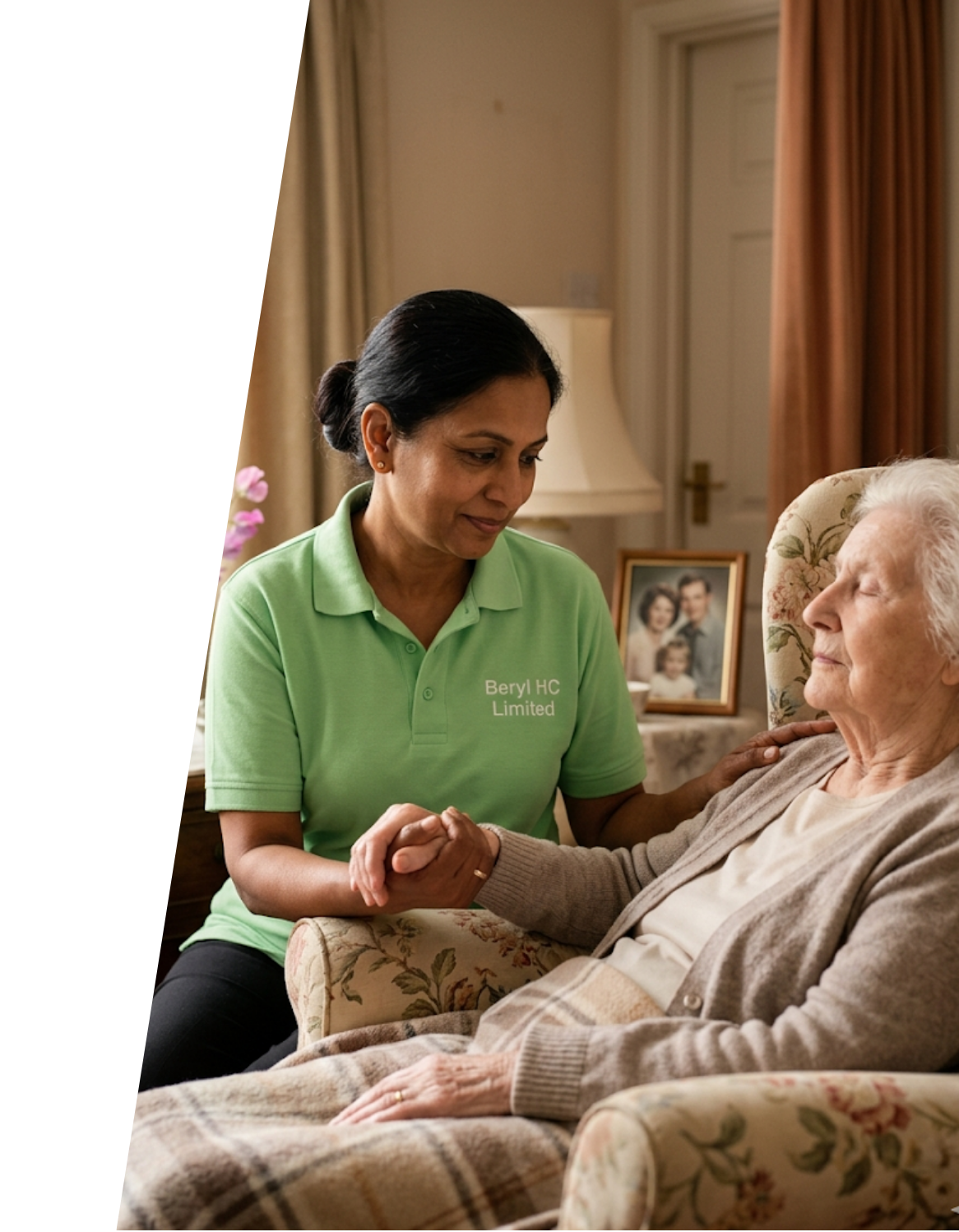
The Service Explained
Choosing to Stay Home at End of Life
For many people, the wish to die at home — in a familiar place, surrounded by those they love — is one of the strongest and most consistent preferences expressed at end of life. Yet without proper support, staying at home is often not possible. Families become overwhelmed, clinical needs increase, and the gap between what a loved one wants and what can be safely managed grows.
Palliative care at home closes that gap. It provides the professional, skilled support that enables individuals to remain where they want to be — not because residential or hospital care has been ruled out, but because home has been made possible.
At Beryl Healthcare, we view palliative care as one of the most significant things we do. It requires carers who are not only clinically competent but emotionally mature, deeply compassionate, and committed to walking alongside a person and their family through one of life's most profound experiences. We choose these carers with exceptional care.
"Every person deserves to spend their final time in a place that feels like theirs. Our role is to make that possible."
What We Provide
What Our Palliative Care Includes
Personal care — gentle washing, dressing, and grooming at the individual's pace
Medication management — including syringe driver support where trained
Pain and symptom monitoring — observation and immediate escalation if needed
Oral care — comfort-focused mouth hygiene and hydration support
Repositioning and pressure area care — preventing discomfort and skin breakdown
Nutritional support — assisting with eating and drinking as ability changes
Emotional support — a calm, consistent presence for the individual
Family support — practical help and compassionate communication throughout
Coordination with clinical teams — GPs, district nurses, hospice, and specialists
Night sitting — a carer present through the night for comfort and safety
End-of-life vigil support — being present with the individual and family
Post-bereavement signposting — guiding families to appropriate support resources
How We Work
How We Approach Palliative Care
Palliative care demands a quality of presence that goes beyond practical skill. Our approach is grounded in three commitments that guide every palliative care placement we make.
The Individual First
We begin every palliative care arrangement by understanding the person — their wishes, their values, and what comfort and dignity mean to them specifically. We follow their lead.
Families as Part of the Care
End-of-life care affects everyone close to the individual. We support families throughout — practically, emotionally, and through honest, open communication — not only the person receiving care.
Sile's Personal Involvement
Sile is personally involved in every palliative care assessment. She does not delegate this. Her 20+ years of experience and her understanding of what this work requires inform every placement decision.
We are here for the person. We are here for the family. We are here for all of it.
Palliative care touches every corner of a family's life. Our carers do not step in only when a task needs doing — they are a steady, compassionate presence for everyone in the home. Supporting the individual with skill and dignity. Sitting with a family member who needs to talk. Being there, without fuss, for whatever is needed most.
Is This Right for Your Family?
Who Our Palliative Care Is For
Our palliative care service supports individuals with a life-limiting diagnosis who wish to remain at home — at any stage of their illness, from early palliative care through to end-of-life support. This includes people with advanced cancer, heart failure, COPD, motor neurone disease, dementia in its later stages, and other progressive or terminal conditions.
It is also the right option for families who are present and wish to be involved in their loved one's care but need professional support alongside them — so that they can be family members first, rather than primary carers.
Palliative care from Beryl does not replace the clinical input of GPs, district nurses, or hospice teams. It works alongside them — providing the day-to-day care, the continuity, and the human presence that clinical visits alone cannot offer.
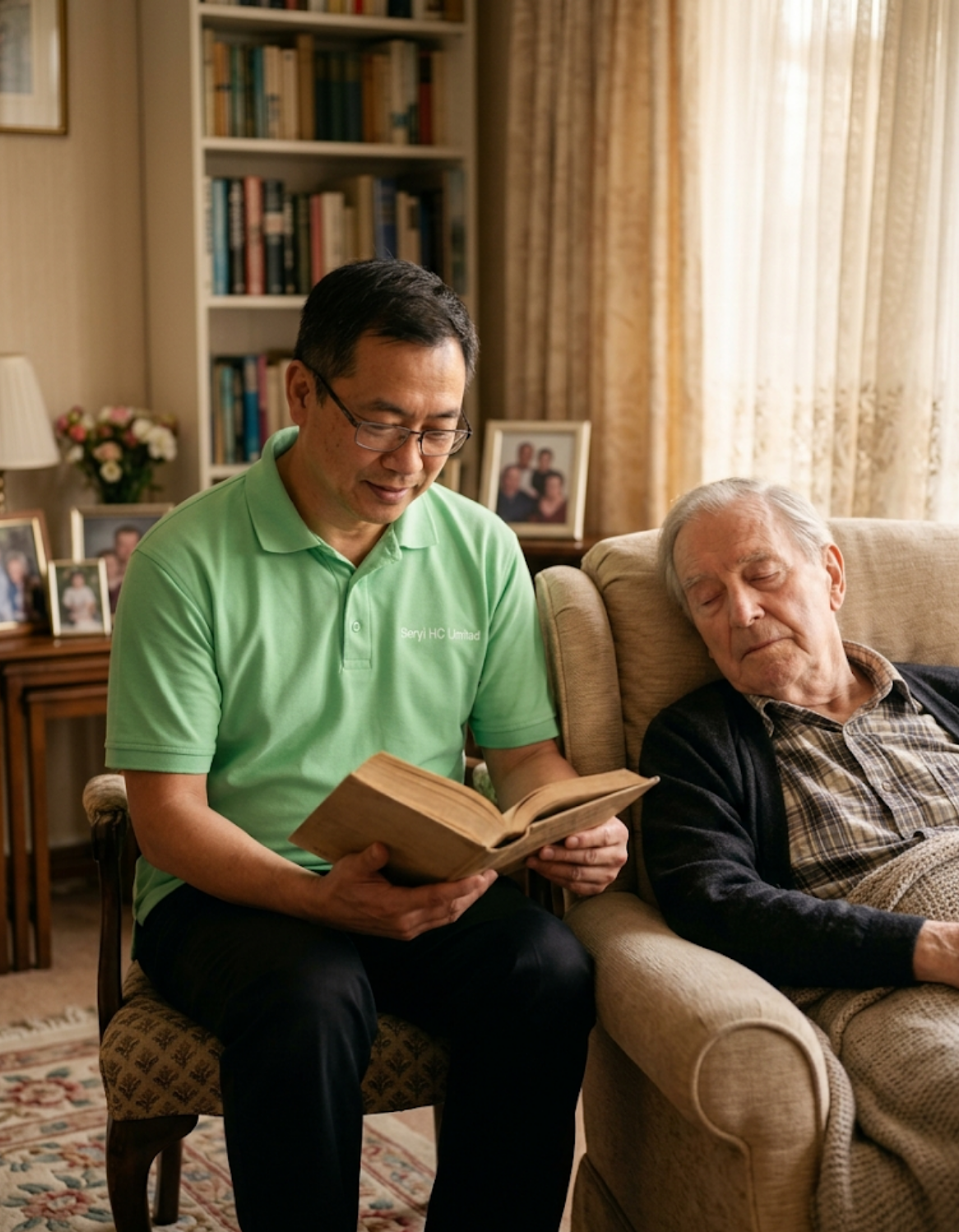
Common Questions
Frequently Asked Questions
We Are Here to Help — At Every Stage.
If you are considering palliative care at home for someone you love, please do reach out. You do not need to have all the answers before you call. Our team will listen carefully, answer your questions honestly, and help you understand what is possible — with no pressure and no obligation.
Sile is personally available to speak with families considering palliative care. Please ask for her by name when you call.